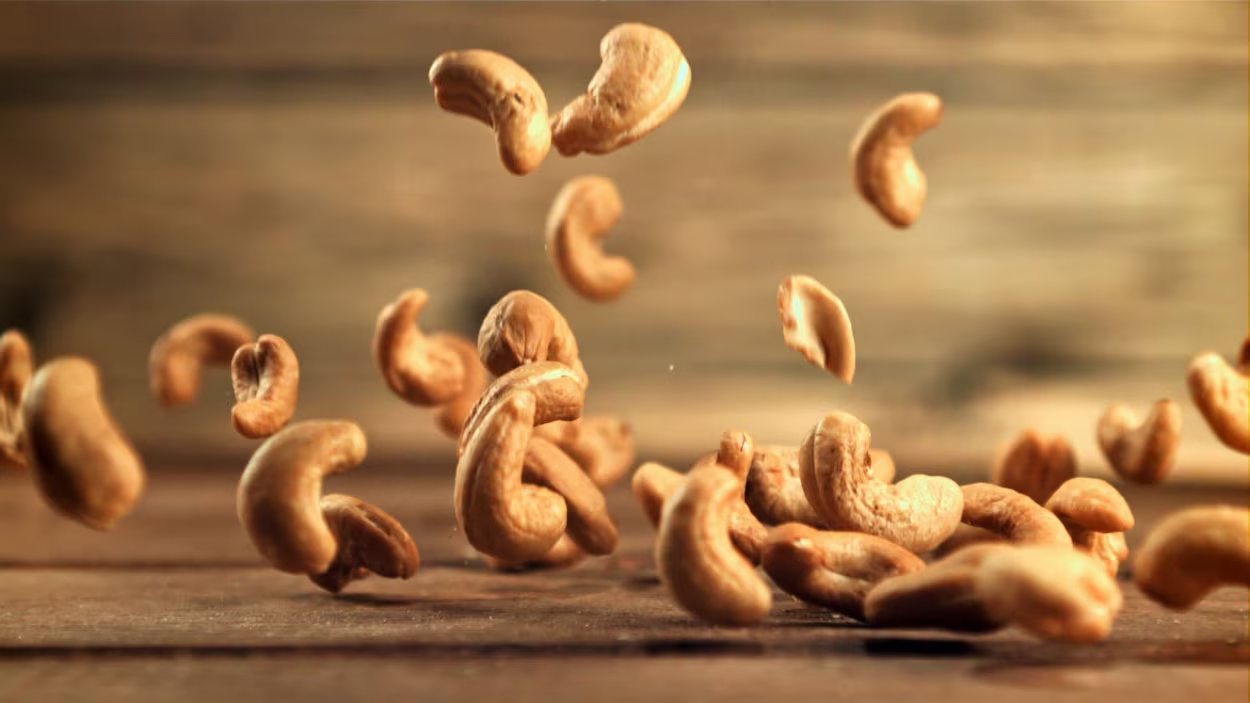
When you buy cashews, you might notice labels like W240, W320, or W450 — but what do these numbers actually mean? These grades tell you about the size, color, and quality of the cashew kernels. Understanding them helps buyers and consumers know exactly what they’re getting.
“Every cashew grade tells a story — of quality, precision, and the care behind every kernel.”
1. What Does the “W” Stand For?
The “W” stands for “White Whole”, meaning the kernel is whole (not broken) and has a uniform, ivory-white color. These are considered premium cashews, ideal for snacks and retail packaging.
2. Understanding the Numbers (240, 320, 450)
The numbers indicate how many kernels are found in one pound (about 454 grams) of cashews.
W240 → Large whole kernels (about 240 nuts per pound) — rich, plump, and high-end.
W320 → Medium-sized kernels (320 nuts per pound) — the most popular grade for both quality and value.
W450 → Smaller kernels (450 nuts per pound) — still delicious, often used in cooking, baking, or blended products.
3. Why the Grades Matter
Cashew grades ensure consistency and quality for buyers around the world. The larger the nut, the more premium (and usually more expensive) it is. But all grades maintain the same nutritional benefits — rich in healthy fats, protein, and minerals.
4. Other Common Grades
In addition to whole kernels, there are broken grades (like splits, pieces, or butts) used in snacks, confectionery, and food manufacturing — proving that every part of the cashew has value.
At Burkina Cajou, we process and supply a wide range of cashew grades, including W240, W320, W450, and others, meeting international quality standards and tailored to your business needs.
From size to flavor — every Burkina Cajou cashew reflects excellence at every grade.